Feeling overwhelmed by the sheer number of options when it comes to protecting your home? You’re not alone. The world of burglar alarm systems UK is filled with technical jargon, from ‘grades’ and ‘zones’ to a confusing array of monitoring contracts. It’s easy to feel lost, worrying if you’re choosing an unreliable system or overpaying for features you simply don’t need.
This comprehensive 2026 guide is here to change that. We will cut through the noise and empower you to make an informed decision. We’ll break down everything you need to know, from the pros and cons of DIY versus professional installation to understanding monitoring options and what ‘police response’ really means for you. Get ready to gain the confidence to choose the right system, find a trusted installer, and secure genuine peace of mind for your home and family.
What is a Burglar Alarm System and How Does It Work?
At its core, a burglar alarm system is a network of interconnected electronic devices designed to detect unauthorised entry into your home or business. Its primary purpose is twofold: to act as a powerful deterrent to would-be intruders and to alert you, your neighbours, or a monitoring service the moment a security breach occurs. Think of it as a sophisticated digital tripwire, standing guard over your property 24/7.
To see these systems in action, this short video provides a great overview of the options available:
The fundamental principle behind all modern burglar alarm systems uk homeowners rely on can be broken down into a simple three-step process: Detect, Alert, and Respond. First, a sensor detects a potential threat. Next, the system raises an immediate alert. Finally, this alert prompts a response, whether from you, a keyholder, or the police.
The Three Core Components of Any Alarm System
Every system, from basic DIY kits to professionally monitored setups, is built around three key elements working in unison:
- The Control Panel: Often called the ‘brain’ of the system, this central hub receives signals from all sensors, processes them, and decides when to trigger an alarm. It’s also where you arm and disarm the system.
- Sensors: These are the ‘eyes and ears’ placed at vulnerable points like doors, windows, and hallways. Common types include magnetic contacts for doors and windows, and passive infrared (PIR) sensors that detect motion and body heat. To understand the full range of technology, it helps to know what is a security alarm? and its various components.
- Warning Devices: This is the ‘voice’ of your system. It includes a loud internal siren to disorient an intruder and an external bell box with a flashing light to alert neighbours and attract attention.
A Step-by-Step Intrusion Scenario
To put it all together, let’s walk through what happens during a potential break-in:
- The homeowner leaves the house and arms the alarm system using a keypad or mobile app.
- An intruder forces open a protected window, separating the two parts of a magnetic contact sensor.
- The sensor instantly sends a signal to the control panel.
- The control panel processes the signal and immediately activates the piercing internal siren and the highly visible external bell box, alerting everyone in the vicinity to the intrusion.
Types of Burglar Alarm Systems: Which is Right for Your Home?
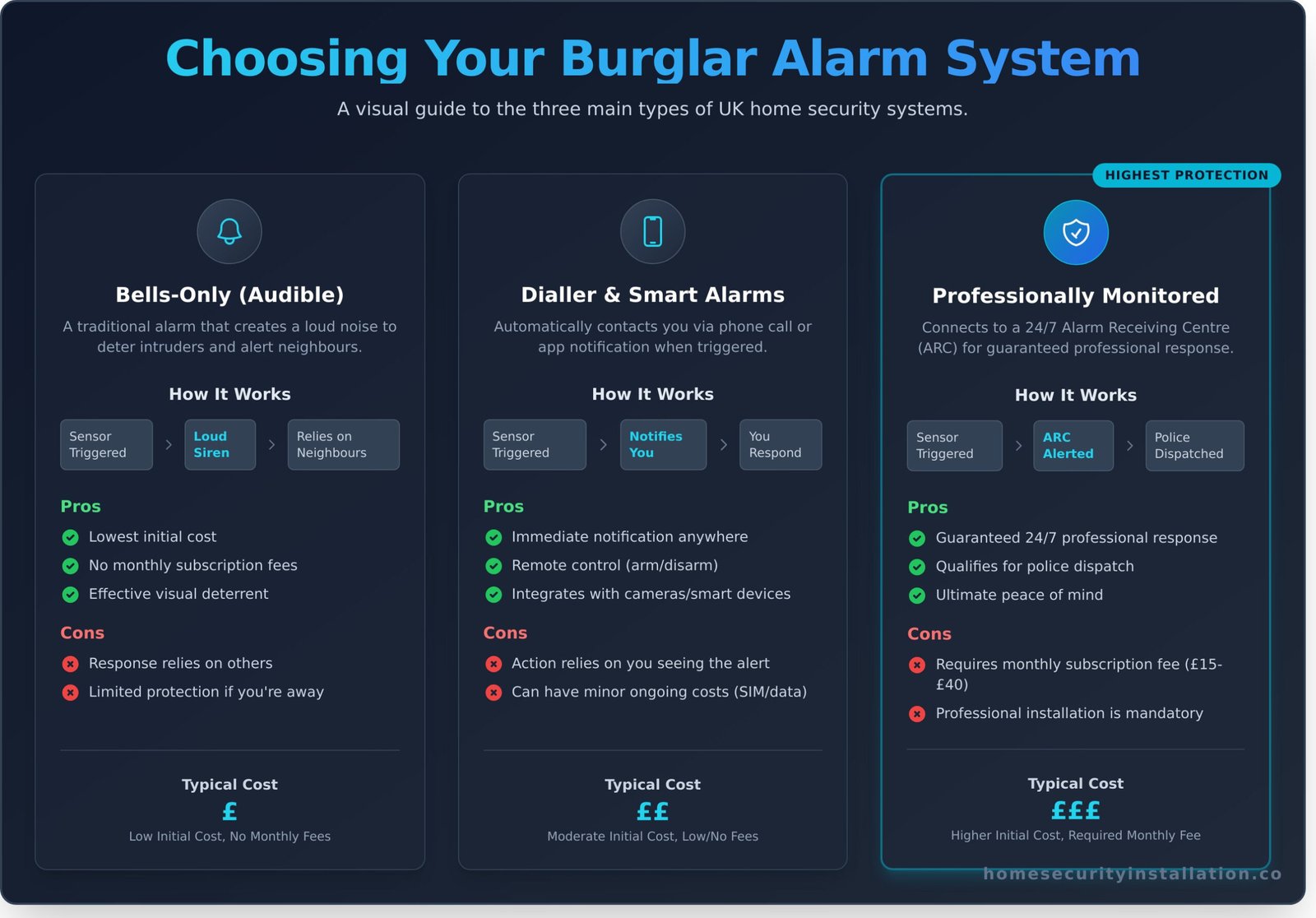
Choosing the right alarm isn’t a one-size-fits-all decision. The best system for your home depends entirely on your property’s specific needs, your budget, and the level of response you require in an emergency. The market for burglar alarm systems uk can be broken down into three main categories, each offering a different level of protection and cost. A fundamental choice you’ll also face is between a wired or wireless setup, a topic we cover in-depth in a separate guide. For now, let’s explore the primary types of alarm responses.
Bells-Only (Audible) Alarms
This is the most traditional type of alarm. When a sensor is triggered, an external siren and bell box activate, creating a loud noise designed to alert your neighbours and scare the intruder away. It’s a simple yet effective deterrent.
- Pros: Highly effective visual deterrent, lowest initial cost, and no ongoing monthly subscription fees.
- Cons: Relies entirely on someone nearby hearing the alarm and deciding to contact you or the police. If you’re away or in a remote area, it offers limited protection.
Dialler and Smart Alarms
A significant step up, these systems automatically contact you when triggered. A ‘dialler’ will call a list of pre-set phone numbers, while modern smart alarms send notifications directly to your smartphone via an app. This gives you instant awareness and allows you to arm or disarm the system remotely.
- Pros: Immediate notification wherever you are, greater control, and enhanced peace of mind. Smart versions often integrate with cameras and other devices.
- Cons: The responsibility to act still falls on you. If you miss the call or notification, no further action is taken.
Professionally Monitored Alarms
For the ultimate in home security, a monitored system connects directly to a 24/7 Alarm Receiving Centre (ARC). When your alarm is activated, trained professionals at the ARC are immediately alerted. They will verify the trigger and, if necessary, dispatch the police to your property. To qualify for a police response, these systems must be installed and maintained by certified professionals, such as NSI-approved installers, who adhere to strict UK standards.
- Pros: Guaranteed professional response around the clock, qualifies for police dispatch, and provides the highest level of protection.
- Cons: Requires a monthly subscription fee (typically ranging from £15-£40) and necessitates professional installation.
Key Components Explained: From Sensors to Smart Features
A modern burglar alarm is far more than a simple siren. It’s a sophisticated network of devices working in unison to create layers of security around your property. Understanding what each component does helps you choose the right setup for your home. A well-designed system combines detection, control, and alert devices to provide comprehensive protection.
Detection Sensors: The Eyes and Ears
These devices are the frontline of your security, designed to detect unauthorised entry. The most effective burglar alarm systems uk homeowners can choose from will typically include a combination of the following:
- PIR Motion Sensors: “Passive Infrared” sensors detect the body heat and movement of an intruder. They are ideal for covering large areas like living rooms, hallways, and landings.
- Door & Window Contacts: These simple magnetic sensors consist of two parts. When a door or window is opened, the magnetic connection is broken, triggering the alarm. They secure the perimeter of your home.
- Glass Break Detectors: These acoustic sensors are tuned to ‘listen’ for the specific frequency of shattering glass, providing an extra layer of protection for conservatories, patio doors, and vulnerable ground-floor windows.
- Pet-Friendly Sensors: To prevent false alarms from your furry friends, these intelligent PIR sensors can be calibrated to ignore movement below a certain weight or height, ensuring your pets can roam freely without triggering the system.
Control and Alert Devices
Once a threat is detected, these components spring into action to alert you and deter the intruder. They also provide the interface for you to manage your system.
The external bell box, or siren, is the most visible part of your alarm. Its presence alone is a powerful deterrent, and its loud siren and flashing strobe light will draw immediate attention during an activation. For daily use, keypads and wireless fobs allow for easy arming and disarming without needing to remember complex codes. In an emergency, a strategically placed panic button can manually trigger the alarm instantly, offering peace of mind when you’re at home.
Smart Home Integration
Modern technology has transformed home security. Smart features connect your alarm to your digital life, giving you unprecedented control and awareness. A dedicated mobile app lets you arm, disarm, and check the system’s status from anywhere in the world. Integrating your alarm with CCTV cameras allows you to receive a notification and immediately view a live feed to verify what triggered a sensor. These smart systems send detailed notifications, such as “Kitchen Window Opened,” directly to your phone. Ensuring these advanced components are configured correctly is vital; a professional installation from an engineer holding NSI or SSAIB certification guarantees your system is both secure and reliable.
Understanding UK Alarm Standards: Grades & Police Response
When choosing a security system, you’ll often encounter terms like ‘Grade 2’ or ‘Police Response’. These aren’t just marketing buzzwords; they are part of a strict regulatory framework designed to ensure reliability and performance. In the UK, professional installations adhere to the European standard EN 50131. This standard grades systems based on their overall resilience to attack, not just the quality of individual components. Understanding these grades is essential for selecting the right protection for your property and ensuring your investment provides real security.
Alarm Grades Explained (Grade 1 to 4)
The grade of an alarm system directly relates to the level of risk it is designed to mitigate. A professional installer will assess your property to recommend the appropriate grade.
- Grade 1: Basic protection suitable for low-risk properties with no specific history of burglary. An intruder is assumed to have limited knowledge and few tools. These are often DIY systems.
- Grade 2: The most common standard for UK homes and low-risk small businesses. This system is designed to protect against opportunistic burglars who may have a general knowledge of burglar alarm systems UK and use a basic toolkit.
- Grade 3: For high-risk homes or commercial properties that require enhanced security. The system is robust enough to counter premeditated attacks by skilled intruders using specialist equipment.
- Grade 4: The highest level of security, typically required for banks, jewellers, or sites storing extremely high-value assets. It is designed to withstand a planned, professional attack.
Police Response and Unique Reference Numbers (URN)
Many assume that any ringing alarm will automatically summon the police, but this is a common misconception. For the police to respond to an activation, the alarm system must be professionally installed and monitored by an accredited Alarm Receiving Centre (ARC).
To enable this, the ARC obtains a Unique Reference Number (URN) from the local police force for your property. This URN officially registers your system for a police response. It’s important to note that DIY alarms, even those with third-party monitoring, are not eligible for a URN.
Police response is tiered. A new URN grants Level 1 (immediate) response. However, if your system generates several false alarms within a 12-month period, the police can downgrade it to Level 3, which means response is withdrawn entirely. This makes a professional, high-quality installation crucial to avoid the nuisance and security risk of false alarms.
DIY vs. Professional Installation: Making the Right Choice
One of the biggest decisions you’ll make when choosing a home security solution is whether to install it yourself or hire a professional. The market is filled with excellent off-the-shelf kits from brands like SimpliSafe, Ring, and Yale, making the DIY route more accessible than ever. However, the choice isn’t just about saving a few pounds; it’s a trade-off between cost, convenience, and the ultimate reliability of your system.
The Case for DIY Alarm Systems
The primary appeal of a DIY system is the lower upfront cost. You purchase the hardware and avoid installation fees, which can save you hundreds of pounds. These systems are also highly flexible; they are typically wireless, easy to set up, and you can take them with you if you move house, making them ideal for renters.
However, the responsibility for the system’s effectiveness rests entirely on your shoulders. Key drawbacks include:
- Installation & Maintenance: Incorrect sensor placement can create security blind spots or trigger frustrating false alarms. You are also responsible for all troubleshooting and maintenance.
- Insurance Compliance: Many UK home insurance policies will only offer a discount for professionally installed and monitored systems that meet specific standards (e.g., NSI or SSAIB certification). A DIY system may not qualify.
- No Police Response: A self-monitored DIY alarm will notify your phone, but it cannot automatically request a police dispatch. This requires a professionally monitored system with a Unique Reference Number (URN).
The Benefits of Professional Installation
While the initial investment is higher, professional installation offers a superior level of security and peace of mind. When it comes to reliable burglar alarm systems uk homeowners can trust, the professional route provides distinct advantages. An expert installer doesn’t just fit the equipment; they design a bespoke system tailored to your property’s specific vulnerabilities.
The key benefits are:
- Expert Design & Placement: A trained engineer will survey your home to identify weak points and ensure every sensor is positioned for optimal coverage, avoiding common DIY mistakes.
- Guaranteed Standards: Professional installations meet strict British and European standards. Systems certified by bodies like the NSI or SSAIB are recognised by insurers and are eligible for police response when linked to a monitoring contract.
- Reliability and Support: Installers use robust, trade-grade equipment that is often more durable than consumer kits. You also benefit from ongoing maintenance, technical support, and a professional warranty.
For a system designed to provide maximum protection and meet official standards, professional expertise is invaluable. Get a free, no-obligation survey for a professionally designed system.
How to Choose a Reputable Alarm Installer
Selecting the right hardware is only half the battle; the quality of the installation is what truly determines the effectiveness and reliability of your security. With so many companies offering burglar alarm systems uk, it’s crucial to vet your installer carefully to ensure you receive a professional, compliant, and supportive service. A reputable installer provides not just a product, but long-term peace of mind.
Check for Accreditations
The most important sign of a trustworthy installer is third-party certification. In the UK, look for companies accredited by either the NSI (National Security Inspectorate) or the SSAIB (Security Systems and Alarms Inspection Board). These independent bodies rigorously audit their members to ensure they meet high technical standards (like BS EN 50131), employ security-screened staff, and are financially stable. NSI Gold or SSAIB certification is non-negotiable for a system that qualifies for police response and may earn you a discount on your home insurance.
Evaluate Their Process from Start to Finish
A professional company’s process reveals their commitment to quality. They should never offer a generic quote over the phone without understanding your property’s unique layout and risks. Look for a provider who offers:
- A free, no-obligation site survey: An expert should visit your home to assess vulnerabilities and discuss your specific security needs before recommending a solution.
- A detailed, itemised quotation: You should receive a clear breakdown of all costs, including hardware, labour, and any ongoing monitoring fees. There should be no hidden charges.
- Post-installation training: Once the system is fitted, the engineer should walk you through its operation, ensuring you are confident in using it day-to-day.
Look at Experience and Reviews
A company’s history and reputation speak volumes. While new businesses can be excellent, an installer that has been operating for decades—perhaps since the 1980s—has a proven track record of reliability and customer satisfaction. Check for genuine, recent reviews on platforms like Google to see what local customers are saying. Finally, ensure they provide a comprehensive warranty on all parts and labour, as well as an option for an ongoing servicing contract to keep your system in perfect working order for years to come.
Taking these steps ensures you partner with an installer who will protect your home effectively. For a free site survey from an NSI-accredited team with over 40 years of experience, contact us today.
Secure Your Home with Confidence: Your Final Checklist
Navigating the world of home security can feel complex, but as this guide has shown, making an informed decision is entirely within your reach. You now understand the crucial differences between alarm types, the importance of UK standards like Grades, and the value of professional installation. Choosing the right protection is one of the most important investments you can make for your property and your family’s peace of mind.
When it comes to the best burglar alarm systems uk has to offer, expert advice is invaluable. With over 40 years of experience protecting homes across Hertfordshire, Buckinghamshire, and NW London since 1980, our NSI and SSAIB accredited installers provide trusted, reliable security solutions. Don’t leave your safety to guesswork; let our experts design a system tailored perfectly to your needs.
Take the definitive step towards a safer, more secure home. Request Your Free Home Security Survey Today and invest in the ultimate peace of mind.
Frequently Asked Questions
How much does a burglar alarm system cost in the UK?
The cost of burglar alarm systems in the UK varies significantly. A basic, self-installed ‘bells-only’ system can start from around £200. Professionally installed wireless systems typically range from £400 to £800, depending on the number of sensors and features. For a fully monitored system with police or keyholder response, you should also budget for a monthly subscription fee, which can range from £15 to £50, in addition to the initial installation cost.
Can I have a burglar alarm if I have pets?
Yes, absolutely. Modern alarm systems are designed with pets in mind. You can opt for ‘pet-friendly’ or ‘pet-immune’ Passive Infrared (PIR) sensors. These clever devices are calibrated to ignore movement from animals below a certain weight, typically up to 35kg. This allows your dog or cat to roam freely around your home without triggering a false alarm, ensuring your property remains protected and your pets remain comfortable.
Will my alarm system work if the power goes out?
Yes, any professionally installed alarm system will continue to function during a power cut. All systems are fitted with a backup battery that automatically takes over if the mains electricity fails. This battery is designed to power the system for several hours, typically between 8 and 12, ensuring your home remains secure. The system will also usually notify you or the monitoring station that it is running on battery power.
Do I need to pay a monthly fee for a burglar alarm?
This depends on the type of system you choose. ‘Bells-only’ alarms and many smart alarm systems do not require a monthly fee; you own the equipment outright. However, if you want professional monitoring, where a security company is alerted when the alarm is triggered, you will need to pay a monthly subscription. These monitored systems provide a higher level of security, often including police or private keyholder dispatch.
Does having a burglar alarm reduce my home insurance premium?
In most cases, yes. UK insurance providers often offer a discount on home insurance premiums if you have a professionally installed and maintained burglar alarm. The discount can range from 5% to 15%, with higher reductions typically offered for systems that are monitored by a third-party company. Always inform your insurer about your alarm system and provide any certification to ensure you receive the applicable discount on your policy.
How often does a burglar alarm system need to be serviced?
For optimal performance and reliability, it is recommended to have your burglar alarm system professionally serviced once a year. An annual service check ensures all components, including sensors, control panels, and backup batteries, are working correctly. Regular maintenance is often a requirement for monitored systems and may also be a condition of your home insurance policy to qualify for a discount on burglar alarm systems UK.