Are you still relying on traditional keys, with the constant worry of them being lost, stolen, or copied? For many UK property owners, managing who has access is a significant security concern, yet the prospect of a complex access control system installation can feel daunting. The daily challenge of tracking staff, visitors, and contractors without a clear audit trail is a problem that traditional locks simply cannot solve, leaving your premises vulnerable.
This is where modern security provides a definitive solution. In this complete 2026 UK guide, we will demystify the entire process for you. We provide the expert guidance needed to confidently choose, plan, and implement the right system for your property-from simple keypad entry to advanced biometric scanners. Our goal is to empower you with the knowledge to find a scalable, reliable solution that fits your budget and operational needs, ensuring a professional and hassle-free installation from a trusted partner.
By the end of this article, you will have a clear roadmap to achieving a secure, keyless entry solution, gaining full control over your property, and experiencing the complete peace of mind that comes with knowing you are protected.
What is an Access Control System & Why Move Beyond Traditional Keys?
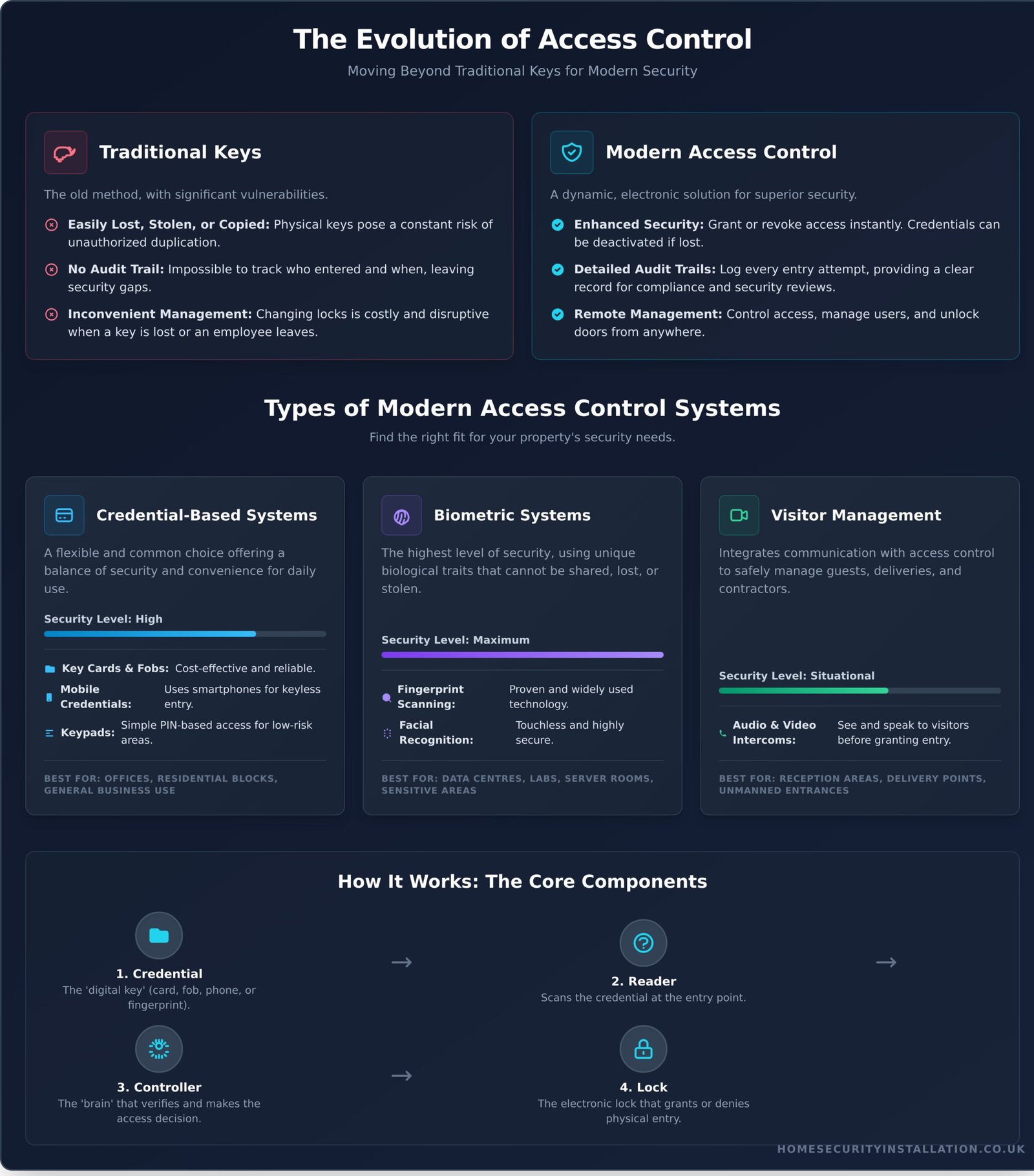
In simple terms, an access control system is a modern, electronic method for managing who can enter a property, a specific room, or an area-and when. Unlike traditional metal keys, which can be easily lost, stolen, or copied, an electronic system provides dynamic and reliable control. The foundational principle of access control is to minimise risk by limiting entry to authorised personnel only.
At its core, the system works by verifying an individual’s identity via a credential-such as a key card, fob, or smartphone-before a centralised controller grants or denies entry through an electronic lock. This move away from mechanical locks gives you complete visibility and authority over your premises, delivering an unparalleled level of security and peace of mind. A professional access control system installation is the first step toward achieving this advanced protection.
The Core Benefits for Your Property
Investing in a modern access control solution provides tangible benefits that go far beyond simply locking a door. It empowers property managers and business owners with robust, flexible security.
- Enhanced Security: Restrict unauthorised access to your entire building or sensitive areas like server rooms and stock cupboards, protecting valuable assets and data.
- Operational Efficiency: Instantly revoke access for a lost card or a former employee without the cost and hassle of changing all the locks.
- Detailed Audit Trails: Gain valuable insight with a digital log of who entered a specific door and at what time, providing clear records for security or compliance purposes.
- Remote Management: Grant or revoke access permissions, lock or unlock doors, and manage schedules from anywhere with an internet connection.
Who Needs Access Control? Common Applications
From small offices to large industrial complexes, an access control system installation provides tailored security for a wide range of environments in the UK.
- Businesses & Offices: Secure main entrances after hours, protect sensitive client information in specific offices, and manage staff access across different departments.
- Residential Blocks: Provide secure, convenient, and keyless entry for residents in apartment buildings and gated communities, while easily managing access for new tenants.
- Schools & Nurseries: Safeguard students and staff by controlling main entry points and ensuring only authorised individuals can enter the premises during school hours.
- Warehouses & Industrial Sites: Protect high-value stock and equipment, manage access for contractors and delivery drivers, and monitor activity across large, complex sites.
Key Terminology Explained Simply
Understanding the basic components helps demystify how these advanced systems work to protect your property.
- Credential: The unique digital ‘key’ used to request access. This can be a physical item like a card or fob, a code entered on a keypad, or a biometric marker like a fingerprint.
- Reader: The device installed at the entry point that scans or reads the credential and sends the information to the controller.
- Controller: The ‘brain’ of the system. It receives data from the reader, checks it against the programmed access rules, and decides whether to unlock the door.
- Locking Mechanism: The physical electronic lock (e.g., a magnetic lock or electric strike) that secures the door and receives the command from the controller to lock or unlock.
Types of Access Control Systems: Finding the Right Fit for You
Choosing the right access control technology is the first step towards securing your premises and achieving complete peace of mind. The best solution depends on your unique security requirements, the number of users, and your budget. From a simple standalone keypad for a single stockroom to a fully networked solution for a large commercial building, the success of your access control system installation hinges on selecting the right components.
To help you make an informed decision, we’ve outlined the main types of systems available, each designed to meet different operational needs.
Credential-Based Systems: Cards, Fobs, and Mobile Access
These are the most common systems, offering a reliable and proven balance of security and user convenience. They work by granting access when a user presents an approved credential to a reader at the entry point.
- Key Cards & Fobs: A cost-effective and dependable choice for most businesses. Using RFID or NFC technology, these are simple to issue to staff and can be deactivated instantly if lost or stolen, maintaining the integrity of your security.
- Mobile Credentials: For ultimate modern convenience, this technology turns a user’s smartphone into a secure key via an app. It’s an excellent, flexible option for dynamic workplaces, eliminating the need to manage physical credentials.
- Keypad Systems: Based on a simple Personal Identification Number (PIN), keypads are ideal for low-to-mid security areas where managing physical cards is unnecessary or impractical.
Biometric Systems: Fingerprint and Facial Recognition
Biometrics provide the highest level of security by using an individual’s unique biological traits-such as a fingerprint or facial structure-for identification. Because these credentials cannot be lost, forgotten, or shared, they offer unparalleled protection. This advanced technology is best suited for high-security environments like data centres, laboratories, or sensitive document storage areas where access must be strictly controlled.
Visitor Management: Intercom and Video Entry Systems
Managing visitors is a critical part of a comprehensive security plan. Audio and video intercom systems allow your staff to see and speak with visitors before granting them entry. This is an ideal solution for reception areas, delivery points, and unmanned entrances. These systems integrate seamlessly with other access control methods, allowing a receptionist to unlock a door remotely after verifying a visitor’s identity, ensuring your premises remains secure at all times.
The Professional Installation Process: Our Step-by-Step Approach
An access control system is only as reliable as its installation. While it may be tempting to cut corners, a professional access control system installation by certified engineers is the only way to guarantee robust security and flawless operation. Our structured, transparent process is designed to provide complete peace of mind, ensuring your system is specified, fitted, and tested to the highest UK standards from start to finish.
We set clear expectations on timescales and work to minimise any disruption, keeping you informed at every stage. Here is how we deliver a seamless and successful installation.
Step 1: Initial Consultation & Site Survey
Our process begins by listening. We take the time to understand your specific security concerns, daily routines, and operational requirements. A certified security expert will then conduct a thorough on-site survey, assessing your property’s entry points, doors, and existing network infrastructure. This allows us to identify potential challenges upfront and recommend the most effective and reliable solutions for your premises.
Step 2: Custom System Design & Bespoke Quotation
Based on the site survey, we design a system tailored precisely to your needs and budget. You will receive a detailed, easy-to-understand quotation with a full breakdown of costs-we believe in complete transparency with no hidden fees. We will walk you through the proposed design, explaining how each component works to secure your property and answering any questions you may have before work begins.
Step 3: Meticulous Installation by Certified Engineers
Our highly skilled, certified engineers carry out the installation with precision and care. We understand the importance of minimising disruption, so we work efficiently and tidily to ensure your business or home life can continue as normal. All hardware, from readers and locks to control panels, is fitted neatly, and all wiring is concealed where possible. Throughout the process, every component is rigorously tested to ensure it meets our exacting standards.
Step 4: System Commissioning & User Training
Once the physical installation is complete, we commission the system. This involves a comprehensive series of tests to confirm every function is operating perfectly. We then provide clear, simple training for you and your staff on how to use the system effectively. We won’t consider the job finished until you are completely confident in managing your new access control solution. Ready for a professional survey? Request a free quote today.
Integrating Access Control with Your Total Security System
An access control system is a powerful tool on its own, but its true potential is unlocked when it works in harmony with your wider security infrastructure. While standalone systems can manage entry, a fully integrated solution creates a seamless, intelligent network that provides unparalleled security and complete peace of mind. This holistic approach ensures every component of your security works together, leaving no gaps in your protection.
Linking with CCTV for Visual Verification
By connecting your access control with modern CCTV cameras, you add a crucial layer of visual evidence to every entry event. This transforms your system from a simple gatekeeper into an active surveillance tool, allowing you to see exactly what is happening at your property’s key access points.
- Instant Verification: Configure cameras to automatically record when a door is opened or a credential is used. This allows you to instantly verify the identity of the person entering, preventing credential sharing.
- Event-Based Recording: The system can flag and record specific events, such as a ‘door forced open’ or ‘access denied’ alert, providing you with immediate, relevant footage for review.
- Simplified Investigations: Quickly search and review video clips linked to specific access events, saving valuable time when investigating an incident.
Connecting with Intruder and Fire Alarms
Integration with alarm systems ensures your property responds intelligently and automatically during an emergency, protecting both people and assets. This creates a smart, responsive environment that enhances safety and security when it matters most.
- Automated Lockdown: When your intruder alarm is armed, high-security doors can be automatically locked down, creating an additional barrier against unauthorised access.
- Safe Evacuation: In the event of a fire alarm, the system can automatically unlock designated fire escape routes, ensuring a swift and safe evacuation while maintaining security at other access points.
- Emergency Roll Call: Use the access control log to quickly generate a real-time report of who is inside the building, a critical tool for emergency services.
The Advantage of a Single Security Partner
Choosing a single, trusted provider for your complete security solution eliminates the risks of incompatible systems and fragmented support. When we handle your access control system installation, we ensure it communicates flawlessly with your other alarms and cameras from day one. As your dedicated partner, you benefit from one point of contact for installation, maintenance, and support.
Founded in 1980, our team brings decades of holistic security expertise to every project. A professional access control system installation is just one part of the comprehensive, reliable security solution we can provide. To learn how we can design an integrated system for your property, talk to one of our certified UK experts today.
Key Considerations Before and After Your Installation
Investing in an access control system is a significant step towards securing your property. Making the right choices before, during, and after installation ensures your system delivers reliable protection for years to come. As your trusted partner in security, we are here to guide you through the key considerations, providing clarity and confidence in your decision.
Budgeting for Your System: Installation & Ongoing Costs
The initial cost of your system will depend on several factors, including the number of doors you need to secure, the type of readers (e.g., keypad, card, or biometric), and integration with other security measures like CCTV. While this is the primary investment, it’s also wise to consider modest ongoing costs for software licenses or a comprehensive maintenance plan. This investment delivers a strong long-term return by enhancing security, improving operational efficiency, and providing complete peace of mind.
The Importance of Ongoing Maintenance & Support
A successful access control system installation is just the beginning. To ensure its continued reliability and security, regular maintenance is essential. This includes performing routine checks on hardware and applying critical software updates to protect against emerging digital vulnerabilities. Our expert support plans give you direct access to certified technicians, ensuring any issues are resolved swiftly and your property remains secure at all times.
Data Protection and GDPR Compliance
Modern access control systems process personal data by logging who accesses specific areas and when. Under UK law, this activity must be GDPR compliant. Choosing a system and an installer that understands these legal obligations is crucial to avoid potential fines and protect sensitive information. We are committed to installing systems that are designed for compliance, safeguarding both your premises and your data with the highest level of professional care.
From initial planning to long-term support, our team is dedicated to providing a security solution that meets your exact needs. To discuss your project and receive a tailored quote, we invite you to talk to an expert today.
Secure Your Premises with an Expert Access Control System Installation
Moving beyond traditional locks and keys is a fundamental step in modern security. As we’ve explored, choosing the right system and ensuring it integrates flawlessly with your existing security are crucial decisions for protecting your property. The reliability of your system, however, hinges on a professional access control system installation.
Since 1980, our certified UK professional installers have provided trusted security solutions for homes and businesses across Hertfordshire, Buckinghamshire, and NW London. We are committed to delivering the control, convenience, and complete peace of mind you deserve.
Ready to take the next step towards a safer, more secure future? Let our experience guide you.
Talk to a Security Expert About Your Access Control Needs
Frequently Asked Questions
How much does a typical access control system cost to install?
The cost of an access control system installation in the UK varies based on your specific needs. A basic standalone system for a single door typically starts from around £500. For a small office requiring a networked system covering 3-5 doors, you can expect costs to range from £2,000 to £5,000. Factors influencing the final price include the number of doors, the type of locking mechanism required, and the complexity of the system’s software and integration.
Can access control be fitted to any type of door, including glass or automatic doors?
Yes, our certified professionals can install access control on virtually any door type. Standard wooden or uPVC doors use electric strikes or bolt locks. For frameless glass doors, we use specialised magnetic locks (maglocks) and brackets to ensure a secure fit without damaging the door. Automatic doors can also be integrated seamlessly, allowing the system to control their operation, providing a complete and reliable security solution for any entrance point in your building.
What happens to the security system if the power goes out?
Your security is our top priority, which is why all professionally installed systems include a battery backup. In the event of a power cut, this backup power supply ensures your access control system continues to function without interruption, keeping your premises secure. Doors that need to remain locked will stay locked, and authorised personnel can still gain access. This feature provides continuous protection and complete peace of mind, regardless of external power conditions.
How secure are key fobs and cards from being copied or cloned?
The security of your credentials depends on the technology used. While older, low-frequency (125kHz) fobs can be vulnerable to cloning, modern systems use advanced, high-frequency encrypted technology like MIFARE DESFire or Seos. These credentials use sophisticated encryption and are extremely difficult to copy, providing a highly secure method of access. We always recommend and install systems that use the latest encryption standards to ensure your property is protected against unauthorised duplication.
How long does the installation process usually take for a small office?
For a typical small office with two to four doors, a professional access control system installation can usually be completed within one to two working days. Our experienced engineers work efficiently to minimise disruption to your business operations. The exact timeframe depends on factors such as the building’s existing wiring and the specific type of system being installed. We provide a clear project timeline before any work begins to ensure you know exactly what to expect.
Do I need a constant internet connection for my access control system to work?
Not necessarily for its core function. A networked access control system uses your local network (LAN) to communicate between doors and the central controller, so it will continue to grant or deny access without an internet connection. However, an internet connection is required for features like remote management, receiving real-time alerts on your mobile device, or for systems that are fully cloud-based. Standalone systems require no network or internet connection at all.
What are the main differences between a standalone and a networked access control system?
A standalone system is a self-contained unit designed to control a single door. All administration, such as adding or removing a user’s fob, is done directly at the reader itself. It is a simple and cost-effective solution for small sites. A networked system connects multiple doors to a central computer running management software. This provides powerful, centralised control, allowing you to manage user permissions, view detailed event logs, and create access schedules from one location.