Choosing the right protection for your property should deliver complete peace of mind, but the process can often feel overwhelming. You may be worried about hiring an untrustworthy ‘cowboy’ installer, confused by technical jargon and acronyms like NSI or SSAIB, or concerned about hidden costs. This uncertainty can stand in the way of feeling truly secure. That’s why understanding exactly how to choose a security company you can depend on is the most critical first step in safeguarding what matters most.
This expert guide is designed to remove that stress and empower your decision. We will walk you through seven essential steps to confidently vet and select a professional security partner in the UK. You’ll gain a clear checklist to compare companies, learn what key certifications guarantee quality, and discover how to find a reliable local expert who provides certified protection and ongoing support. By the end, you will have the knowledge to secure your property and achieve the lasting peace of mind you deserve.
Step 1: Before You Search – Assess Your Property’s Security Needs
Before you begin contacting installers, the most critical step is to conduct a thorough assessment of your own security needs. This foundational work ensures you are seeking solutions for your actual risks, not just perceived ones. Creating a clear brief for yourself not only helps you get accurate, comparable quotes later on but is the first smart move in learning how to choose a security company that is genuinely right for you. This proactive approach prevents you from paying for features you don’t need, ensuring a sound investment in your peace of mind.
Define Your Primary Goal: Prevention, Detection, or Evidence?
A professional system can serve multiple functions, but your primary objective will shape its design. Understanding your main goal helps narrow down the technology you need. Consider what is most important for your property:
- Prevention: Focuses on deterring intruders before they attempt a break-in. This includes highly visible components like external bell boxes and prominent CCTV cameras.
- Detection: Aims to alert you and others the moment an intrusion occurs. This is achieved with technology like door and window contacts, glass-break sensors, and internal motion detectors.
- Evidence: In the unfortunate event of a break-in, this goal prioritises gathering clear information. High-definition (HD) CCTV is essential for identifying intruders and recording events for the police.
You may also have secondary needs, such as integrated smoke and carbon monoxide detection or modern access control systems.
Map Your Property’s Vulnerabilities
Take a walk around your property and try to view it from the perspective of a potential intruder. This practical application of fundamental physical security principles is invaluable for identifying weak points. Look for ground-floor windows hidden from street view, secluded side or back doors, and overgrown shrubs that offer easy hiding spots. The vulnerabilities of a detached home will differ significantly from those of a terraced house or a first-floor flat, so tailor your assessment to your specific property type.
Consider Your Budget and Lifestyle
Establishing a realistic budget is a key part of the process. Consider both the initial installation cost, which can range from a few hundred to several thousand pounds, and potential ongoing fees for professional monitoring or annual maintenance contracts. Your daily life is also a critical factor. Do you have pets that require pet-friendly sensors to avoid false alarms? Do you want the convenience of arming, disarming, and viewing cameras remotely from a smartphone app? Answering these questions now will guide you toward a system that provides reliable protection without disrupting your routine.
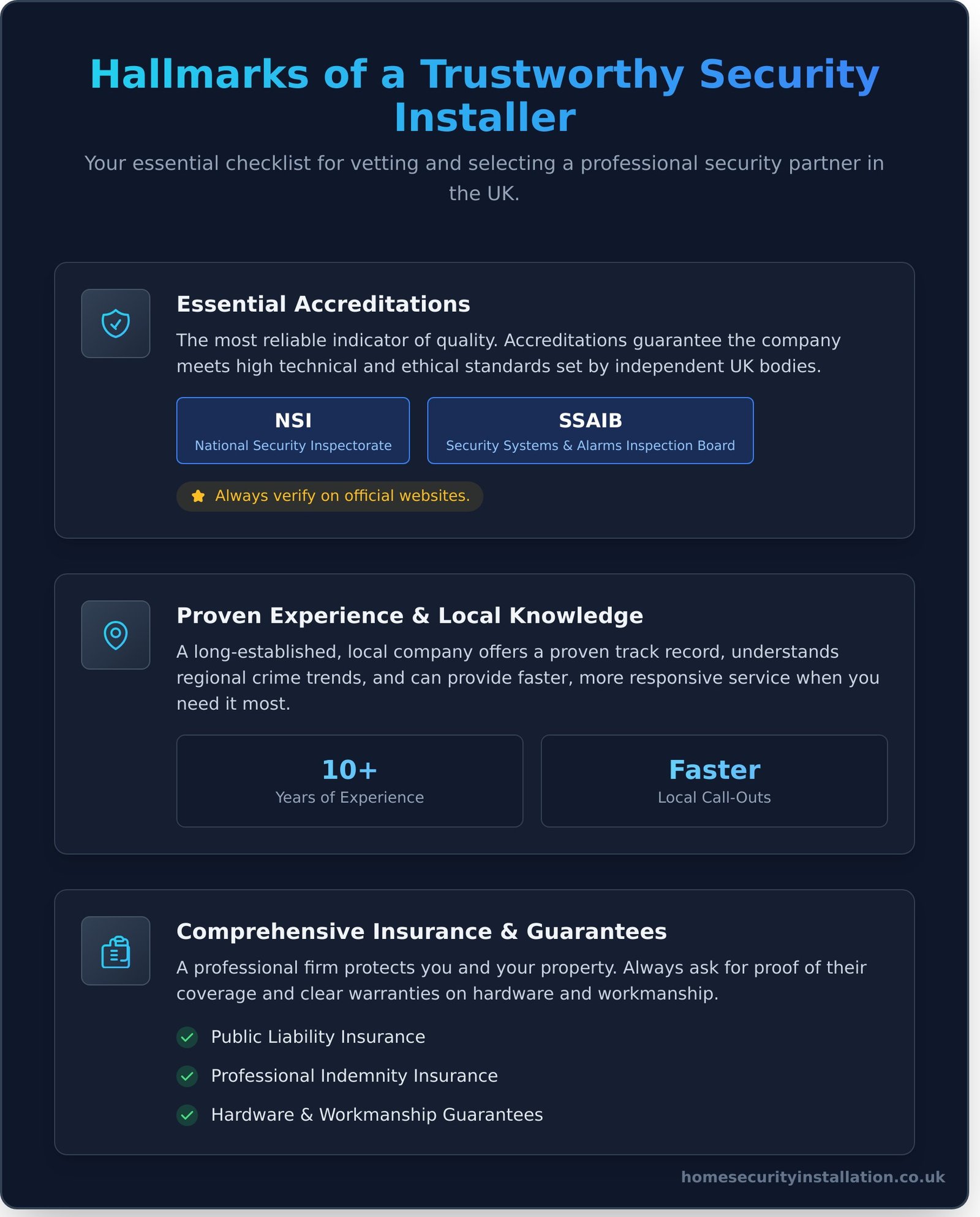
Step 2: Identify the Hallmarks of a Trustworthy Security Installer
When you are learning how to choose a security company, it is crucial to look beyond polished websites and persuasive sales pitches. The market contains a wide range of providers, from highly skilled professionals to unqualified traders. Identifying objective hallmarks of quality is not just advisable-it’s a non-negotiable step towards ensuring your property is genuinely protected. Verifying these credentials before requesting a quote will save you time and provide the confidence that you are dealing with a reputable expert.
Essential Accreditations: NSI, SSAIB, and SIA Explained
In the UK, the most reliable indicators of a professional installation company are accreditations from the National Security Inspectorate (NSI) or the Security Systems and Alarms Inspection Board (SSAIB). These independent bodies rigorously audit their members to ensure they meet high technical standards, including British and European Standards. This certification is your guarantee of competence and quality. While you may also see the SIA (Security Industry Authority) mentioned, this is primarily for companies providing personnel like security guards, not for the installation of systems.
Always verify a company’s claimed accreditation directly on the NSI or SSAIB website.
Proven Experience and Local Knowledge
A long-established history is a powerful sign of reliability and stability. A company that has been operating for decades, for instance, has a proven track record of customer satisfaction and technical expertise. Furthermore, choosing a local installer offers distinct advantages. They possess invaluable knowledge of regional crime trends and common property vulnerabilities in your area. This local presence also means they can provide faster service and more responsive call-outs when you need them most, delivering true peace of mind.
Comprehensive Insurance and Guarantees
A professional security installer operates with complete transparency and accountability. This includes holding comprehensive insurance to protect you and your property. Before committing, you should always ask for proof of their coverage. This is a fundamental part of the vetting process, a point reinforced by the advice from the Electronic Security Association on thoroughly checking a provider’s credentials. Key protections to look for include:
- Public Liability Insurance: This covers the cost of accidental damage to your property during the installation process.
- Professional Indemnity Insurance: Protects you against losses caused by errors in the system’s design or faulty advice.
- Hardware & Workmanship Guarantees: A reputable firm will offer clear warranties on all equipment and the quality of their installation work.
A trustworthy company will be forthcoming with this information, as it demonstrates their commitment to professional and reliable service.
Step 3: Vet Potential Companies with This Practical Checklist
With a shortlist of potential installers, it’s time for deeper research. This vetting process is crucial for separating a good company from a great one, helping you narrow your options down to the top two or three contenders. The key is to look for consistency across their online presence, reviews, and direct communications. A trustworthy provider will be transparent and professional at every touchpoint.
Analyse Online Reviews and Case Studies
Look beyond the simple star rating. Delving into the content of customer reviews on platforms like Google, Trustpilot, and local directories provides invaluable insight into the real customer experience. Are clients praising the installation process, the system’s reliability, or the engineer’s professionalism? A reputable firm will also showcase its expertise with professional case studies on its website. Pay special attention to feedback that mentions:
- Post-installation support and aftercare services
- Responsiveness to issues or questions
- The quality and thoroughness of the initial consultation
Review Their Website and Communication
A company’s website is its digital storefront and a strong indicator of its professionalism. A credible installer will have a clean, informative site that clearly lists a physical address and a landline telephone number-not just a mobile. Check for a detailed breakdown of their services and prominently displayed accreditations (such as NSI or SSAIB approval). When you reach out via phone or email, assess their response. Are they prompt, knowledgeable, and helpful? This first interaction often sets the tone for the entire customer experience.
Ask About Their Engineers and Subcontracting Policy
Knowing exactly who will be working in your home is non-negotiable and a vital step in learning how to choose a security company you can truly trust. Reputable firms directly employ their engineers, who should be fully qualified and have passed rigorous security screening, such as a DBS check. Don’t hesitate to ask if they use subcontractors. If they do, they must be able to confirm that these partners are also fully accredited and adhere to the same high standards. A professional company will understand the importance of this and comply with all relevant government licensing and regulation, ensuring complete peace of mind.
Step 4: The Quoting Process – What to Expect and How to Compare
Once you have a shortlist of accredited installers, the next step is to request quotes. A professional security quote is far more than just a price; it’s a detailed proposal outlining the specific solution designed to protect your property. To ensure a fair and thorough comparison, we recommend obtaining two to three detailed, written quotes from different reputable companies.
The Importance of a Physical Site Survey
A crucial part of the process is the physical site survey. Any professional installer will insist on visiting your property before providing a final quote. This is not an upsell tactic; it is a fundamental requirement for designing an effective system. During the survey, an expert assesses vulnerabilities, identifies optimal locations for sensors and cameras, and understands your specific security concerns. This is also your opportunity to ask questions and gauge their expertise. Be wary of any company offering a fixed price over the phone without a survey, as this often leads to inadequate protection or unexpected costs later.
Anatomy of a Good Quote
A trustworthy quote provides complete transparency and leaves no room for ambiguity. A key step in learning how to choose a security company is knowing what to look for in their proposal. Your quote should always be a formal, written document that includes:
- Itemised Costs: A clear breakdown of all components, including the make and model of each piece of equipment (e.g., control panel, PIR sensors, cameras) and all labour charges.
- System Design: A summary or diagram showing the proposed placement of all devices.
- Warranty Information: Full details on the warranty period for both equipment and installation workmanship.
- Ongoing Fees: Any recurring costs for services like professional monitoring or maintenance packages must be clearly stated.
- Company Details: The company’s full name, address, contact information, and accreditation numbers (e.g., NSI or SSAIB).
Comparing Quotes: Look Beyond the Bottom Line
While cost is an important factor, the cheapest quote is rarely the best value. When comparing proposals, look closely at the details. Does one company propose higher-resolution cameras or a greater number of detection points for better coverage? Is the warranty more comprehensive or the included maintenance period longer? Consider the quality of the brands being proposed. Finally, reflect on your impression of the surveyor’s professionalism and knowledge. Your peace of mind depends on a reliable system and a responsive company.
Ready to get a clear, comprehensive plan for your security? Request a free, no-obligation survey from our experts.
Step 5: Spotting the Red Flags – How to Avoid Rogue Traders
When learning how to choose a security company, knowing what to avoid is just as crucial as knowing what to look for. Rogue traders and unprofessional outfits often use specific tactics to secure a quick sale, potentially leaving you with a substandard system and no reliable support. Always trust your instincts-if an offer seems too good to be true or a salesperson makes you feel uneasy, it is a clear sign to walk away. A truly professional security partner will always prioritise your peace of mind over a fast transaction.
High-Pressure Sales Tactics
Beware of installers who create a false sense of urgency. Tactics like “today only” discounts or claims that a “special offer” expires the moment they leave your home are major red flags. A reputable company will provide a detailed, no-obligation quote that remains valid for a reasonable period, typically 30 days. This ensures you have the necessary time to review the proposal and make a considered, confident decision without feeling forced to sign a contract on the spot.
Vague Quotes and Unclear Costs
A professional quote should be transparent, breaking down the costs for equipment, labour, and any ongoing services. If you only receive a single lump-sum price with no itemisation, proceed with caution. Furthermore, be wary of companies that are not upfront about recurring costs. Always ask directly: “Are there any other costs I should be aware of, such as monthly monitoring fees or annual maintenance charges?” A trustworthy installer will provide a clear schedule of all potential expenses in pounds sterling (£).
Lack of Verifiable Credentials
An installer’s legitimacy and professional standing should be easy to confirm. If a company exhibits any of the following behaviours, it is a significant warning sign that they may not be a credible provider:
- Hesitation or refusal to provide their NSI or SSAIB accreditation number.
- Operating without a physical office address and relying solely on a mobile number.
- A poorly maintained website, or no professional online presence at all.
- An inability to produce a valid certificate of their public liability insurance.
Protecting your property is a serious responsibility. By remaining vigilant for these red flags, you can confidently navigate the process of how to choose a security company and find a trusted partner dedicated to your long-term safety. For a transparent and professional assessment from a certified UK installer, feel free to talk to one of our experts.
Your Next Step to Complete Peace of Mind
Making the right choice for your property’s protection is a significant decision. This guide has shown that the process begins with a clear assessment of your security needs, followed by a thorough check of a company’s credentials and reputation. By carefully comparing quotes and avoiding common red flags, you can confidently navigate how to choose a security company that will keep you safe for years to come.
Since 1980, our family-run business has been the trusted partner for homes and businesses seeking reliable security. As fully NSI and SSAIB Certified installers, we provide not just advanced systems, but the complete peace of mind that you deserve. Our expert local installers in Hertfordshire, Bucks, and NW London are ready to help you find the perfect solution.
Ready to secure your property with a team you can depend on? Talk to a Trusted Security Expert for a Free Quote and let us put our four decades of experience to work for you. You are now equipped to make a confident choice in protecting what matters most.
Frequently Asked Questions About Choosing a Security Installer
What is the difference between NSI Gold and SSAIB certification?
Both NSI (National Security Inspectorate) and SSAIB (Security Systems and Alarms Inspection Board) are leading UK certification bodies. They ensure installers meet high technical standards. NSI Gold is often considered the premier accreditation as it also requires the company to meet the ISO 9001 Quality Management standard. Choosing an installer with either certification guarantees a professional, reliable service and is essential for police response systems.
Should I choose a local independent company or a large national provider?
Local companies often provide a more personalised service with in-depth knowledge of your specific area. Large national providers may offer standardised packages and widespread brand recognition. For a bespoke solution tailored precisely to your property, a trusted local expert often provides greater flexibility, accountability, and a more dedicated, long-term relationship for your complete peace of mind.
How much should I expect to pay for a professional home security system installation?
A professionally installed, insurance-approved burglar alarm for a typical UK home generally starts from around £600 to £900. The final cost depends on the size of your property, the number of sensors, and whether you opt for a wired or wireless system. A comprehensive CCTV system will be a higher investment. Always request a detailed, itemised quote following a professional site survey.
Do I own the security equipment after it is installed?
With most reputable independent installers, you own the equipment outright once payment is complete. This is a critical point to confirm, as some national providers may lease the equipment as part of a long-term monitoring contract. Owning your system provides greater long-term value and freedom from restrictive agreements, giving you complete control over your security investment and property protection.
What are the most important questions to ask a security company during the survey?
Key questions include: “Are you NSI or SSAIB accredited?” and “What warranty is included on parts and labour?”. Also, ask about all ongoing maintenance or monitoring costs to ensure transparency. Knowing how to choose a security company means asking direct questions, such as confirming you will own the equipment outright, to ensure there are no hidden surprises and you receive the best possible service.
Is a professionally monitored system better than a bells-only alarm?
A bells-only alarm deters intruders with a loud siren, relying on neighbours to respond. For a higher level of protection, a professionally monitored system is superior. When triggered, it alerts an Alarm Receiving Centre (ARC), where operators verify the alarm and can contact the police or your designated keyholders. This ensures a guaranteed, swift response, providing true security and peace of mind.
How long does a typical burglar alarm or CCTV installation take?
A standard wireless burglar alarm installation in a typical three-bedroom house usually takes between three and five hours to complete. A more complex wired system or a multi-camera CCTV installation may take a full day or more. Your professional installer will provide you with a clear and accurate time estimate for the work required after conducting their initial, thorough survey of your property.